La vite arborata e il paesaggio che cambia
ITA
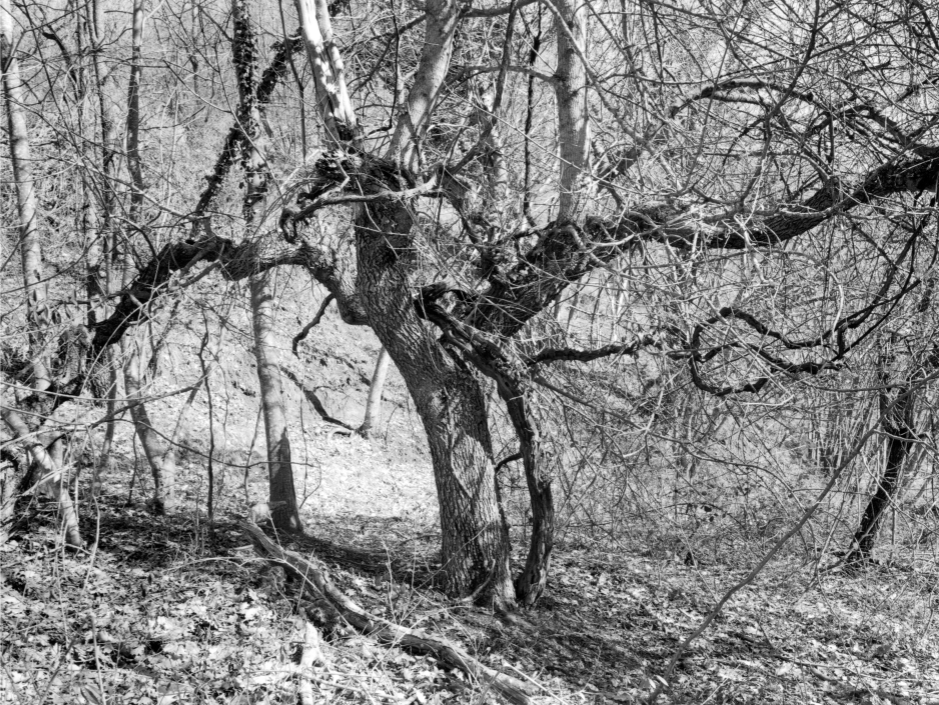
Fino ai primi anni ’50, i territori che circondano Montefortino erano ampiamente coltivati. L’agricoltura era il cuore pulsante dell’economia locale e i campi modellavano il paesaggio, scandendo i ritmi e la vita del paese. Una pratica molto diffusa era quella della vite arborata, una tecnica antica che consisteva nel far arrampicare le viti sugli aceri campestri. Questo sistema, oltre a proteggere la vite dal freddo del terreno, permetteva di coltivare altre piante alla base, sfruttando al massimo lo spazio disponibile. Nel dialetto montefortinese, l’unione tra vite e acero era chiamata proprio vite arborata. Per secoli questo equilibrio tra uomo e natura ha caratterizzato il paesaggio locale. I campi ordinati, le viti che si intrecciavano agli alberi e le persone al lavoro erano parte di una quotidianità condivisa. Ma con l’arrivo dei trattori e il progressivo spopolamento delle aree interne, questa forma di agricoltura è stata lentamente abbandonata. I nuovi mezzi meccanici richiedevano spazi più ampi e regolari, incompatibili con la disposizione delle viti arborate. E quando le famiglie hanno iniziato a lasciare il paese in cerca di lavoro altrove, anche i campi hanno cominciato a svuotarsi, lasciando spazio al ritorno del bosco. Oggi, percorrendo le strade e i sentieri intorno a Montefortino, è facile imbattersi in distese di vegetazione spontanea dove un tempo si stendevano campi coltivati. Qua e là, ancora resistono testimonianze di quel passato: una vite selvatica che si arrampica ostinata su un vecchio acero campestre, ormai circondata da un bosco fitto che si è ripreso il suo spazio. Quello che agli occhi di molti potrebbe sembrare un segno positivo — il ritorno della natura e del verde — per chi ha vissuto intensamente quella stagione contadina è invece un segno di sconfitta. Nei racconti degli anziani del paese, emerge spesso un sentimento di nostalgia. Adamo, oggi ultraottantenne, lo racconta con parole che sanno di rimpianto: “Quando ero bambino, se avessi guardato verso quei campi non avresti visto boschi, ma solo viti arborate e persone al lavoro.” Per Adamo e per molti della sua generazione, l’avanzata del bosco non è sinonimo di natura incontaminata, ma è il simbolo visibile di un mondo abbandonato, di un lavoro faticoso che non ha trovato eredi, di una cultura agricola che si è dissolta lentamente, lasciando il posto al silenzio e alla dimenticanza. Camminando per questi luoghi, si può ancora leggere il paesaggio come una storia aperta: i campi non sono mai solo campi, i boschi non sono mai solo boschi. Ogni angolo racconta ciò che è stato, e dietro ogni tronco si nasconde una memoria che resiste, anche se il tempo sembra volerla cancellare.
ENG
Until the early 1950s, the lands surrounding Montefortino were extensively cultivated. Agriculture was the beating heart of the local economy, and the fields shaped the landscape, setting the rhythm of the town’s life. One of the most common practices was that of the “vite arborata,” an ancient technique where grapevines were trained to climb field maples. This system not only protected the vines from the cold ground but also allowed other crops to be grown at their base, making the most of every available piece of land. In the Montefortino dialect, the union between vine and maple was simply called “vite arborata.” For centuries, this balance between man and nature defined the local landscape. The orderly fields, the vines intertwining with the trees, and people working the land were all part of a shared daily life. But with the arrival of tractors and the gradual depopulation of the inland areas, this form of agriculture was slowly abandoned. The new machinery required wider, more regular spaces, incompatible with the arrangement of the vine-maple system. And as families began to leave the village in search of work elsewhere, the fields also began to empty, giving way to the return of the forest. Today, walking along the roads and trails around Montefortino, it is easy to come across stretches of spontaneous vegetation where cultivated fields once stood. Here and there, traces of that past still remain: a wild vine stubbornly climbing an old field maple, now surrounded by a dense forest that has reclaimed its space. What may seem to many like a positive sign—the return of nature and greenery—is, for those who lived through that farming era, a sign of defeat. In the stories of the village’s elders, a sense of nostalgia often emerges. Adamo, now in his eighties, recounts it with words tinged with regret: “When I was a child, if you had looked toward those fields, you would not have seen forests, only vine-maple rows and people working.” For Adamo and many of his generation, the advancing forest is not a symbol of pristine nature but rather the visible sign of an abandoned world, of hard work that found no heirs, of an agricultural culture that slowly dissolved, giving way to silence and forgetfulness. Walking through these places, the landscape can still be read like an open story: fields are never just fields, forests are never just forests. Every corner tells what once was, and behind every tree trunk hides a memory that still resists, even if time seems intent on erasing it.
Un luogo apparentemente insignificante
ITA
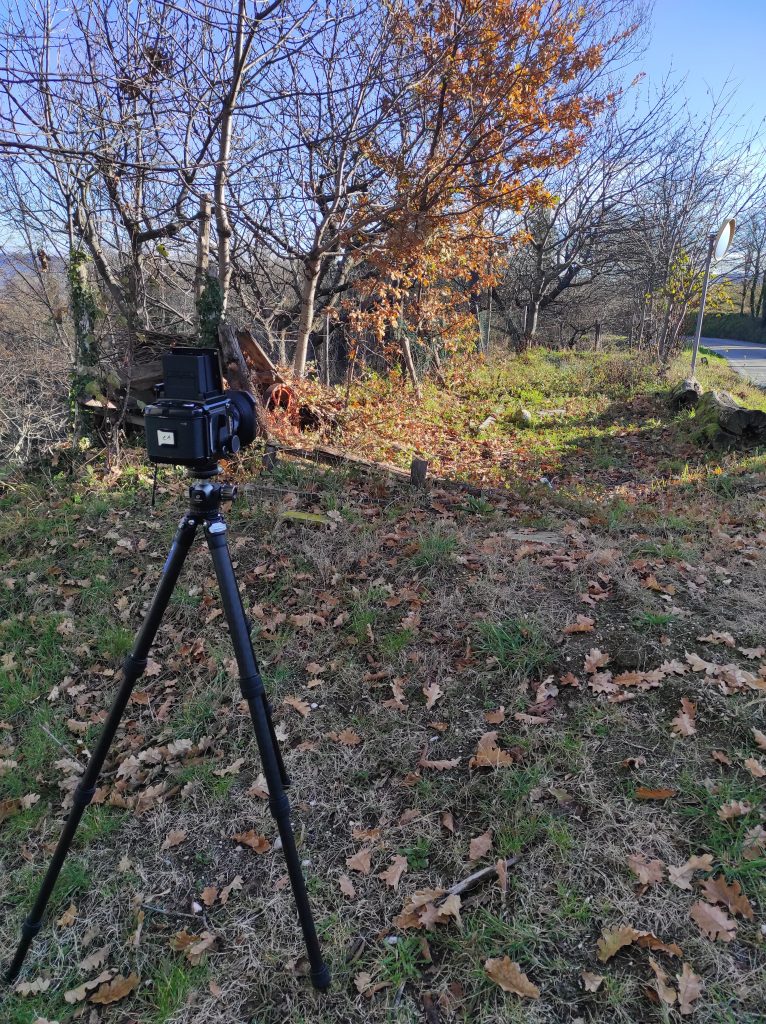
Questo è uno dei luoghi più importanti della mia infanzia, uno di quei luoghi del cuore che ormai non si riconoscono più. Si intravede un po’ il segnapunti e il perimetro rettangolare; si intravedono ancora gli “spalti” fatti con dei tronchi di pioppo e un vecchio carro abbandonato; se si scava un po’ sotto il fogliame si ritrova anche la vecchia bombola del gas che veniva usata come rullo per compattare il terreno. Questo è il luogo nel quale, nelle calde serate d’estate, mano nella mano con mio papà andavo a vedere i “campioni” di Bussonico (la mia frazione). Quando ancora non avevo un motorino che mi permettesse di “fuggire” in paese, l’intrattenimento serale era infatti il campo da bocce. Come si ammirano i campioni del calcio, anche io qui guardavo giocare i miei compaesani, molti dei quali ormai non ci sono più. Mi ricordo il modo in cui Armando sorridendo mi diceva con il suo accento romano “Ah Michè!”, la calma e precisione con cui “accostava” Nello De Miché o il modo in cui “sbocciava” mio zio Mario tenendo la boccia sotto il palmo della mano. Mi ricordo i loro discorsi da grandi: si parlava di orto, di legna, di frutti o si raccontavano barzellette che mi facevano ridere anche se io non le capivo mai. Mi sentivo uno di loro e sebbene la differenza di età fosse enorme, mi sentivo davvero un loro amico, ed in fondo lo ero. Io correvo, guardavo, mi riempivo le scarpe di sabbia ed ero felice quando mi lasciavano tirare “lu pallì” (il pallino). Da anni ormai nessuno in questo campo ci gioca più e di tutte queste serate, di questi ricordi ora rimane un luogo solo apparentemente insignificante.
ENG
This is one of the most important places of my childhood, one of those places of the heart that we no longer recognize. You can glimpse the scorecard and the rectangular perimeter; you can still see the “stands” made with poplar trunks and an old abandoned wagon; if you dig a little under the foliage you will also find the old gas cylinder which was used as a roller to compact the soil. This is the place where, on warm summer evenings, hand in hand with my dad, I used to go to see the “champions” of Bussonico (my hamlet). When I still didn’t have a moped that would allow me to “escape” to the village, the evening entertainment was in fact the “bocce” (bowls) field. As football champions are admired, I too watched my fellow villagers play here, many of whom are no longer alive. I remember the way Armando, smiling, in his Roman accent “Ah Michè!”, the calm and precision with which Nello de Miché “approached” the bowls or the way in which my uncle Mario “hit” holding the bowl under his palm of the hand. I remember their grown up conversations: they talked about the garden, wood, fruit trees or they told jokes that made me laugh even if I never understood them. I felt like one of them and although the age difference was huge, I really felt like a friend of theirs, and deep down I was. I ran, I looked, I filled my shoes with sand and I was happy when they let me shoot “lu pallì” (the cue ball). For years now no one has played in this field anymore and of all those evenings, of all these memories now only an apparently insignificant place remains.
Quinto
ITA
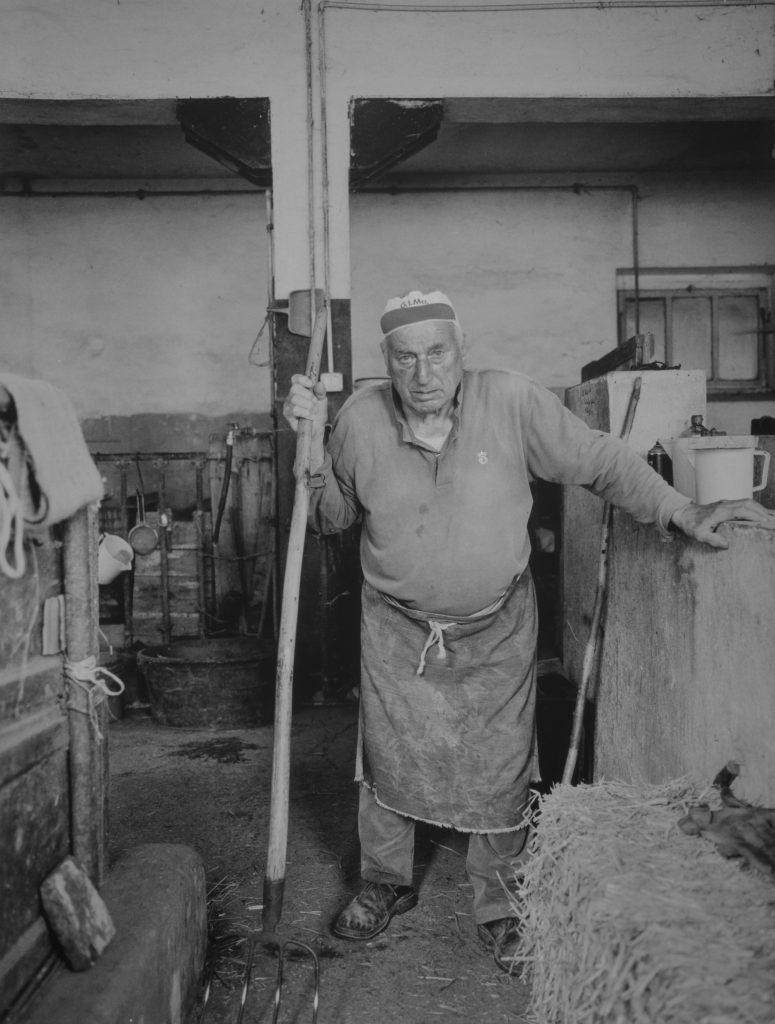
In una mattina dello scorso agosto, arrivo a Cerretana (frazione di Montefortino) per incontrare Quinto. Quinto è uno degli ultimi allevatori di pecore rimasti in paese. Quinto è nella stalla, come sempre mi dice, e lo trovo tutto indaffarato nei suoi lavori quotidiani. Come spesso mi succede, la prima cosa che mi viene chiesta è “chi figliu sì?”, cioè “di chi sei il figlio?”. Conosco Quinto da quando sono bambino, ma ovviamente non mi riconosce, quindi mi identifico e la sua espressione cambia radicalmente, mostrandomi un grande sorriso e un caloroso saluto. Gli spiego subito che sono venuto a fargli delle foto, e lui mi dice che posso fare quello che voglio ma che nel frattempo deve lavorare nella stalla. Affare fatto! Una cosa mi colpisce subito, quando prende un agnellino in braccio e lo allatta con il biberon, dando prima una poppata lui e poi una l’agnello. Rimango affascinato da questa scena e dall’amore che dimostra verso i suoi animali. Quinto ha fatto sempre questo mestiere tutta la sua vita, insieme ai suoi due fratelli, Mimì e Ascè, e sa bene che valore hanno quegli animali che gli hanno dato da mangiare per tutta la vita. Mi racconta la sua storia, l’aiuto che gli diede Don Peppe (storico parroco di Montefortino) per costruire la stalla e mi parla della sua infanzia. E’ qui che mi racconta per la prima volta di quando, ancora adolescente, come tanti altri montefortinesi, si era trasferito a Roma in cerca di fortuna. Lo dice coprendosi gli occhi con le mani, come per scacciare qualche ricordo. A Roma, a differenza di altri, lui c’è rimasto solo tre mesi, e poi se n’è tornato nella sua Cerretana per aprire la stalla. “Non lo so perché – mi dice – ma non mi piaceva, non era aria di stare là, così presi e me ne andai!”. Quante persone hanno fatto la sua stessa strada per poi non tornare più? Quante persone la stanno facendo ancora oggi? Quanti pastori o artigiani continuano ad essere sottratti a questi luoghi per essere “venduti” alle città, non per scelta ma per bisogno? Me ne vado pensando come sarebbe stata Cerretana oggi, se più di sessant’anni fa, quel giovane avesse deciso di rimanere in quel bar a Roma, e a quanti altri quella strada al ritorno non l’abbiano mai percorsa.
ENG
On a morning last August, I arrive in Cerretana (hamlet of Montefortino) to meet Quinto. Quinto is one of the last remaining sheep farmers in the village. Quinto is in the stable, as he always tells me, and I find him completely busy with his daily work. As often happens to me, the first thing I am asked is “chi figliu sì?”, that is, “who are your parents?”. I’ve known Quinto since I was a child, but obviously he doesn’t recognize me, so I identify myself and his expression changes radically, showing me a big smile and a warm greeting. I immediately explain to him that I’ve come to take some pictures of him, and he tells me I can do whatever I want but, in the meantime, he has to work in the stable. Done deal! One thing strikes me immediately, when he picks up a little lamb in his arms and feeds it with a bottle, first feeding him and then the lamb. I am fascinated by this scene and by the love he shows towards his animals. Quinto has always done this job throughout his life, together with his two brothers, Mimì and Ascè, and knows the value of those animals that have fed him throughout his life. He tells me his story, the help that Don Peppe (historic parish priest of Montefortino) gave him to build the stable and tells me about his childhood. It is here that he tells me for the first time about when, still a teenager, like many other people from Montefortino, he moved to Rome in search of fortune. He says it covering his eyes with his hands, as if to chase away some memory. In Rome, unlike others, he stayed there for only three months, and then he returned to his Cerretana to open the stable. “I don’t know why – he tells me – but I didn’t like it, it didn’t feel like being there, so I took it and left!”. How many people have gone his same way and never come back? How many people are still doing it today? How many shepherds or artisans continue to be taken away from these places to be “sold” to the cities, not out of choice but out of need? I leave thinking how Cerretana would have been today, if more than sixty years ago, that young man had decided to stay in that bar in Rome, and how many others have never traveled that road back. I’m happy that, at least him, has come back.
1.00